Do you feel like you’re using the same simple English words over and over? You can say what you mean, but your English may still sound basic or repetitive. You want to tell an engaging story, change plans without being rude, and share your opinion confidently. If that sounds familiar, you’re in the right place.
Moving from basic to intermediate English is all about adding variety and nuance to your speech. This guide introduces more than thirty practical phrases that you can start using today to sound more natural at work, with friends, and in everyday life.
Table of Contents
Your 30+ Intermediate English Phrase Cheat Sheet
Here’s a quick-reference list of phrases to level up your English conversation. Screenshot this table and keep it handy!
| Category | Phrase | Meaning | Formality | Example |
|---|---|---|---|---|
| Past Experiences | That reminds me of the time… | Connects your story to something another person just said. | Neutral | A: “The train was so delayed.” B: “That reminds me of the time I got stuck in Paris overnight!” |
| I ended up… | Introduces the final, often unexpected result. | Neutral | “I planned to visit the museum, but I ended up spending the whole day at the beach.” | |
| It turned out that… | Introduces what actually happened or proved to be true. | Neutral | “We thought we were lost, but it turned out that the hotel was just around the corner.” | |
| Looking back, I should have… | Reflects on a past mistake or regret. | Neutral | “Looking back, I should have studied more for that exam.” | |
| I had no idea that… | Says that you were completely unaware of something. | Neutral | “I had no idea that Leo could speak three languages!” | |
| Making and Changing Plans | What works best for you? | Asks which time or option another person prefers. | Neutral | “I’m free Tuesday or Wednesday. What works best for you?” |
| Let’s pencil that in for… | Makes a temporary plan that may be confirmed later. | Neutral/Formal | “Let’s pencil that in for Thursday at 2 p.m., and I’ll confirm tomorrow.” | |
| Something’s come up. | Explains that an unexpected event requires you to change your plans. | Neutral | “Something’s come up, so I need to reschedule our lunch.” | |
| I’m afraid I won’t be able to make it. | Politely says that you cannot attend. | Neutral/Formal | “I’m afraid I won’t be able to make it to the party on Saturday.” | |
| Would it be possible to…? | Makes a very polite request or asks for a change. | Formal | “Would it be possible to move our meeting to Friday?” | |
| Explaining Reasons | The main reason is… | Introduces your most important reason. | Neutral | “The main reason I chose this apartment is the location.” |
| That’s partly because… | Introduces one of several reasons. | Neutral | “I’m tired today. That’s partly because I went to bed late.” | |
| On top of that… | Adds another reason or piece of information. | Neutral | “The hotel was expensive. On top of that, the service was slow.” | |
| Another factor is… | Introduces another point to consider. | Neutral/Formal | “Another factor is the project’s budget constraints.” | |
| To put it simply… | Summarizes an idea in the clearest or most basic way. | Neutral | “The theory is complex, but to put it simply, it’s about supply and demand.” | |
| Reactions | That sounds great! | Shows enthusiasm about an idea or plan. | Neutral | A: “Want to get pizza tonight?” B: “That sounds great!” |
| No kidding! | Shows genuine surprise. | Casual | A: “I just won tickets to the concert!” B: “No kidding! That’s amazing!” | |
| That makes sense. | Shows that you understand another person’s reason or logic. | Neutral | A: “I’m saving money for a new car.” B: “Ah, that makes sense.” | |
| That’s a shame. | Expresses sympathy about something disappointing or unfortunate. | Neutral | A: “They canceled the festival because of the rain.” B: “Oh, that’s a shame.” | |
| I’m not so sure about that. | Politely expresses doubt or disagreement. | Neutral | A: “This is the best solution.” B: “I’m not so sure about that. Have we considered another option?” | |
| Fair enough. | Accepts another person’s point, even if you do not fully agree. | Neutral/Casual | A: “I’m too tired to go out.” B: “Fair enough. We can go next week.” | |
| Recommendations and Complaints | I’d definitely recommend… | Makes a strong, positive recommendation. | Neutral | “I’d definitely recommend the new café on Main Street.” |
| You might want to consider… | Makes a gentle suggestion. | Neutral/Formal | “You might want to consider double-checking the figures before the meeting.” | |
| It’s worth trying. | Says that something is a good option to try. | Neutral | “The new software is a little different, but it’s worth trying.” | |
| This isn’t quite what I expected. | Introduces a complaint politely. | Neutral/Formal | “Excuse me, this isn’t quite what I expected. I ordered the chicken, not the fish.” | |
| Would it be possible to look into this? | Politely asks someone to investigate or solve a problem. | Formal | “There seems to be an error on my bill. Would it be possible to look into this?” | |
| I see your point, but… | Acknowledges another person’s view before disagreeing. | Neutral/Formal | “I see your point, but I think we should approach this differently.” | |
| Polite Social and Business English | Please make yourself at home. | Invites a guest to relax and feel comfortable. | Neutral | “Come on in! Please make yourself at home.” |
| Please let me know if you have any questions. | Offers help or additional information. | Formal | “Here is the report. Please let me know if you have any questions.” | |
| It was a pleasure meeting you. | Politely closes a first meeting. | Formal | “Thank you for your time. It was a pleasure meeting you.” | |
| I look forward to hearing from you. | A standard, professional email closing that indicates you expect a reply. | Formal | “I have attached my résumé for your review. I look forward to hearing from you.” | |
| Have a safe trip. | Kindly wishes someone well before they travel. | Neutral | “Enjoy your vacation in Spain! Have a safe trip.” |
Talking About Past Experiences More Naturally

Instead of simply listing events with “And then…and then…,” you can use phrases that express reflection, surprise, or an unexpected outcome. This makes your stories much more engaging.
Phrases such as that reminds me of the time…, I ended up…, it turned out that…, looking back…, and I had no idea that… add a personal, reflective layer to your storytelling.
Here’s a short conversation between Anna and Leo:
Anna: I was in Kyoto last spring, and I booked what I thought was a quiet hotel. But it turned out that my room was right above a karaoke bar! It was so loud.
Leo: That reminds me of the time I booked a cabin in the mountains. The photos looked amazing, but when I got there, it was basically a shed with no electricity.
Anna: Oh no! What did you do?
Leo: Well, I ended up driving back to the city and finding a last-minute hotel. Looking back, I probably should have read the reviews more carefully.
Anna: Definitely! I had no idea that “rustic charm” could mean no power.
Quick Practice
Upgrade each pair of simple sentences using one of the new phrases.
- Basic: I went to the library to study. I saw my friend there.
Upgrade: I went to the library to study and ended up talking with my friend for an hour. - Basic: I thought the movie would be bad. It was actually good.
Upgrade: I thought the movie would be bad, but it turned out that it was actually really good! - Basic: I didn’t bring an umbrella. It started to rain.
Upgrade: Looking back, I should have brought an umbrella.
Making Plans and Changing Them Politely
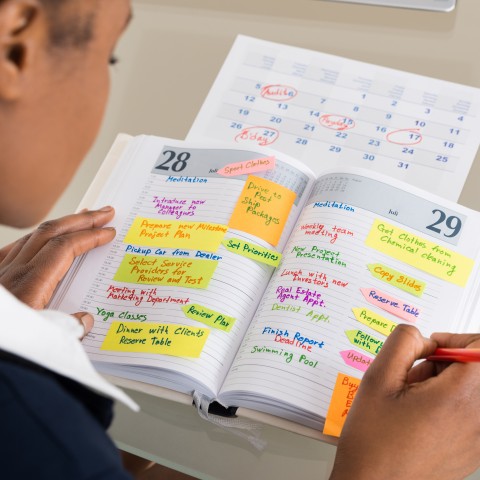
Making, changing, and declining plans is a major part of daily life. The key is choosing the right phrase for the situation. A casual text to a friend is very different from a formal email to a client. Getting this right will help you sound natural in both settings.
Let’s compare how casual Tom and formal Yuna handle scheduling.
Proposing a Plan
- Tom (Casual): “Hey, are you free to grab coffee sometime next week?”
- Yuna (Formal): “I would like to schedule a meeting to discuss the quarterly report. What works best for you?”
Confirming a Plan
- Tom (Casual): “Cool, see you Thursday at seven!”
- Yuna (Formal): “Thank you. We will pencil that in for Thursday at 2 p.m. and send a calendar invitation to confirm.”
Rescheduling or Canceling
- Tom (Casual): “Hey, so sorry, but something’s come up and I can’t make it tonight. Rain check?”
- Yuna (Formal): “Dear team, due to an unforeseen conflict, I’m afraid I won’t be able to make it to our scheduled call. Would it be possible to move it to the same time tomorrow?”
Notice how Yuna uses more complete, indirect wording to create a formal tone. Contractions can still appear naturally in professional English.
Explaining and Organizing Your Reasons Clearly
Do you find yourself always using because and so? To sound more fluent, use connector phrases that organize your thoughts for the listener. They act like signposts, guiding another person through your reasoning.
Use the main reason is… to introduce your most important point. Then, add details with that’s partly because…, on top of that…, or another factor is…. Finally, summarize with that’s why… or to put it simply….
Imagine that you’re explaining why you moved to a new city:
“I decided to move to Vancouver for a few reasons. The main reason is that I received a great job offer. That’s partly because the technology industry here is booming. On top of that, I love the outdoors, and the mountains are right here. Another factor is that my sister lives here, so I have family nearby. To put it simply, it felt like the perfect combination of career and lifestyle.”
Quick Practice
Put these phrases in a logical order to explain a decision:
- On top of that…
- The main reason is…
- That’s why…
- Another factor is…
Answer: 2, 4, 1, 3
Reacting Naturally in Everyday Conversations

Small, natural reactions show that you’re listening and engaged. Moving beyond “yes,” “no,” and “okay” will make your conversations much more dynamic.
- For enthusiasm: That sounds great! (Neutral) or Awesome! (Casual)
- For surprise: Really? (Neutral) or No kidding! (Casual)
- For understanding or agreement: That makes sense. (Neutral) or I get it. (Casual)
- For sympathy: That’s a shame. or That’s too bad. (Both neutral)
- For polite disagreement: I’m not so sure about that. (Neutral) or I see your point, but… (Neutral/Formal)
- For accepting a point: Fair enough. (Neutral/Casual)
Quick Practice
Match each situation to the most natural reaction.
| Situation | Reaction |
|---|---|
| 1. Your friend says, “The concert was canceled.” | A. “No kidding!” |
| 2. Your colleague says, “I need to finish this report, so I can’t join you for lunch.” | B. “That sounds great!” |
| 3. Your friend says, “I just saw a movie star at the supermarket!” | C. “That’s a shame.” |
| 4. Your colleague says, “Let’s meet at 3 p.m. to brainstorm ideas.” | D. “That makes sense.” |
Answers: 1-C, 2-D, 3-A, 4-B
Making Recommendations and Complaints Politely

Giving a recommendation is usually easy, but complaining or disagreeing politely can be one of the trickiest communication skills to master in English. The goal is to be clear and firm while remaining respectful.
Phrases such as this isn’t quite what I expected are a soft way to introduce a problem. Instead of making a demand such as “Fix this,” a polite request like would it be possible to look into this? is usually much more effective.
When disagreeing, acknowledge the other person’s perspective first with I see your point, but…. This shows that you were listening before presenting your own opinion.
Here’s Tom and Yuna planning a team event:
Tom: For the team-building day, I think we should go go-karting. It would be fun and competitive.
Yuna: I see your point about it being fun, but I’m not sure everyone would enjoy it. You might want to consider something more collaborative, like a cooking class. I’d definitely recommend the one downtown; it’s great for team communication.
Tom: A cooking class? Hmm. I’m not so sure about that. Is it expensive?
Yuna: It’s worth trying. We could get a quote first; I think it would cost about the same as go-karting.
Polite Phrases for Social and Business Situations

Certain situations have common, almost-fixed phrases. Using them correctly shows that you understand social and professional customs. This is especially useful when you want to make a strong first impression in English.
- When hosting guests: Please make yourself at home.
This is a warm, welcoming phrase. - In customer service or presentations: Please let me know if you have any questions.
This shows that you are available and willing to help. - After meeting someone for the first time: It was a pleasure meeting you.
This is a standard, polite closing. - In business emails: I look forward to hearing from you.
This is a professional closing that signals that you expect a reply. - When a colleague or friend is traveling: Have a safe trip.
This is a simple, kind way to wish someone well.
For a review of basic workplace vocabulary, see our lesson English Words for the Workplace.
A Quick Note on Formality and Tone
Why do English speakers have so many ways to express the same idea? It’s all about register—the level of formality you use.
This is not about being “correct” or “incorrect.” It’s about choosing language that suits your relationship with the other person and the situation. You speak differently to your boss than you do to your best friend.
Formality can be shown through:
- Word choice, such as request instead of ask
- Sentence length, since longer and more indirect sentences often sound more formal
- The amount of detail or explanation you provide
- Your tone of voice
Contractions such as I’m and won’t are common in both casual and professional English, although very formal writing may use fewer of them.
You do not need to memorize a long list of rules. Listen to how proficient speakers adapt their language in different settings, and you’ll gradually develop a natural sense of what fits each situation.
Practice Challenge: Use the Phrases in Real Situations
Learning phrases is helpful, but using them is what makes them stick. Try this seven-day plan to make the expressions part of your active vocabulary.
- Day 1—Past Experiences: Tell a friend or write in a journal about something interesting that happened recently. Use at least two phrases, such as it turned out that… or looking back….
- Day 2—Making Plans: Send a real email or message to make a plan with someone. Use what works best for you? or let’s pencil that in.
- Day 3—Explaining Reasons: The next time you explain a decision—even a small one, such as what to eat for dinner—use a phrase like the main reason is….
- Day 4—Reactions: Pay close attention during a conversation or while watching a show in English. When you hear something interesting, use a reaction such as no kidding! or that makes sense, even if you only say it to yourself.
- Day 5—Recommendations: Recommend a book, movie, or restaurant using I’d definitely recommend… or it’s worth trying.
- Day 6—Polite Disagreement or Complaints: Role-play a situation in which a server brought you the wrong food. Practice introducing your complaint with this isn’t quite what I expected.
- Day 7—Polite Closings: End an email with I look forward to hearing from you, or wish a colleague a good weekend or safe trip.
Final Self-Check
Combine at least one phrase from each category into a short, imaginary conversation. Try to keep the level of formality consistent throughout.
For example:
Yuna: “Looking back, I should have booked a later flight. Something’s come up, so would it be possible to move tomorrow’s meeting to Friday? The main reason is that my return flight has been delayed.”
Tom: “That makes sense. I’d definitely recommend Friday afternoon.”
Yuna: “Thank you. Let’s pencil that in for 2 p.m. Please let me know if you have any questions.”
Check that each phrase suits the relationship and situation you have chosen.
By practicing these intermediate English phrases, you’re not just learning vocabulary—you’re learning how to communicate more effectively and build better relationships. Keep listening, keep practicing, and you’ll be amazed at how much more natural your English becomes.
If you want to explore the grammar behind polite requests and suggestions, a great next step is our lesson What is a Modal Verb? English Grammar for Daily Life Conversations.